


 CLOSE
CLOSE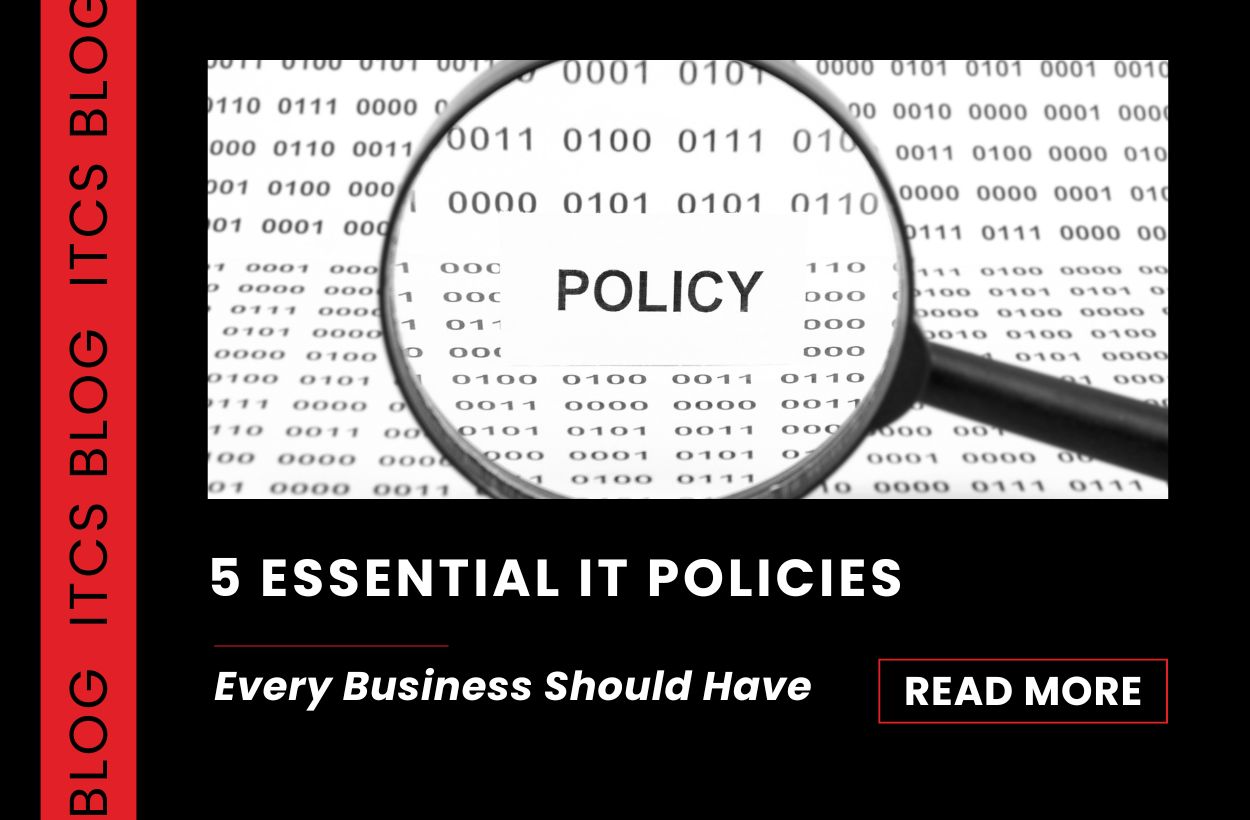
Your business is only as secure as your IT policies. There are too many companies that operate without essential guidelines, leaving themselves wide open to cyberattacks, data loss, and costly downtime.
Don’t be one of them.
Here are 5 essential IT policies every business should have in place (but most don’t):
- Acceptable Use Policy (AUP)
Your employees should know what they can and can’t do on company devices and networks. An Acceptable Use Policy outlines how employees should use technology responsibly – covering everything from personal device usage to social media access. Without one, you risk security breaches and data leaks. The business AUP needs to be clear and specific. Employees should understand what’s allowed, what’s off-limits, and the consequences of breaking the rules.
- Password Management Policy
Weak passwords are like leaving your office door unlocked. A Password Management Policy ensures employees follow best practices for creating and managing passwords. This includes enforcing password complexity, regular updates, and multi-factor authentication (MFA).
- Data Backup & Recovery Policy
Systems can crash or a cyberattack strike could happen at any time. Without a solid Backup and Recovery Policy, you risk losing everything. This policy should define how often data is backed up, where it’s stored, and how quickly you can restore it in a crisis. IT is important to use automated, encrypted backups and regularly test your recovery process to ensure it works when you need it most.
- Incident Response Plan
When disaster strikes, every second counts. An Incident Response Plan outlines how to detect, contain, and recover from security incidents like data breaches or ransomware attacks. Without one, confusion and delays can make a bad situation even worse. We advise regularly training your team with simulated attacks to keep them sharp and ready.
- Remote Work Policy
Remote work is here to stay, but is your business prepared? A Remote Work Policy defines how employees securely access company systems from outside the office. It should cover the use of VPNs, secure Wi-Fi, and guidelines for handling sensitive data. It is essential to ensure all remote workers use encrypted connections and company-approved devices.
If these essential IT policies aren’t in place, your business could be at serious risk. At ITCS, we help businesses implement robust IT policies to protect their data, systems, and future.
Need help getting started? Contact us today for expert guidance and solutions.